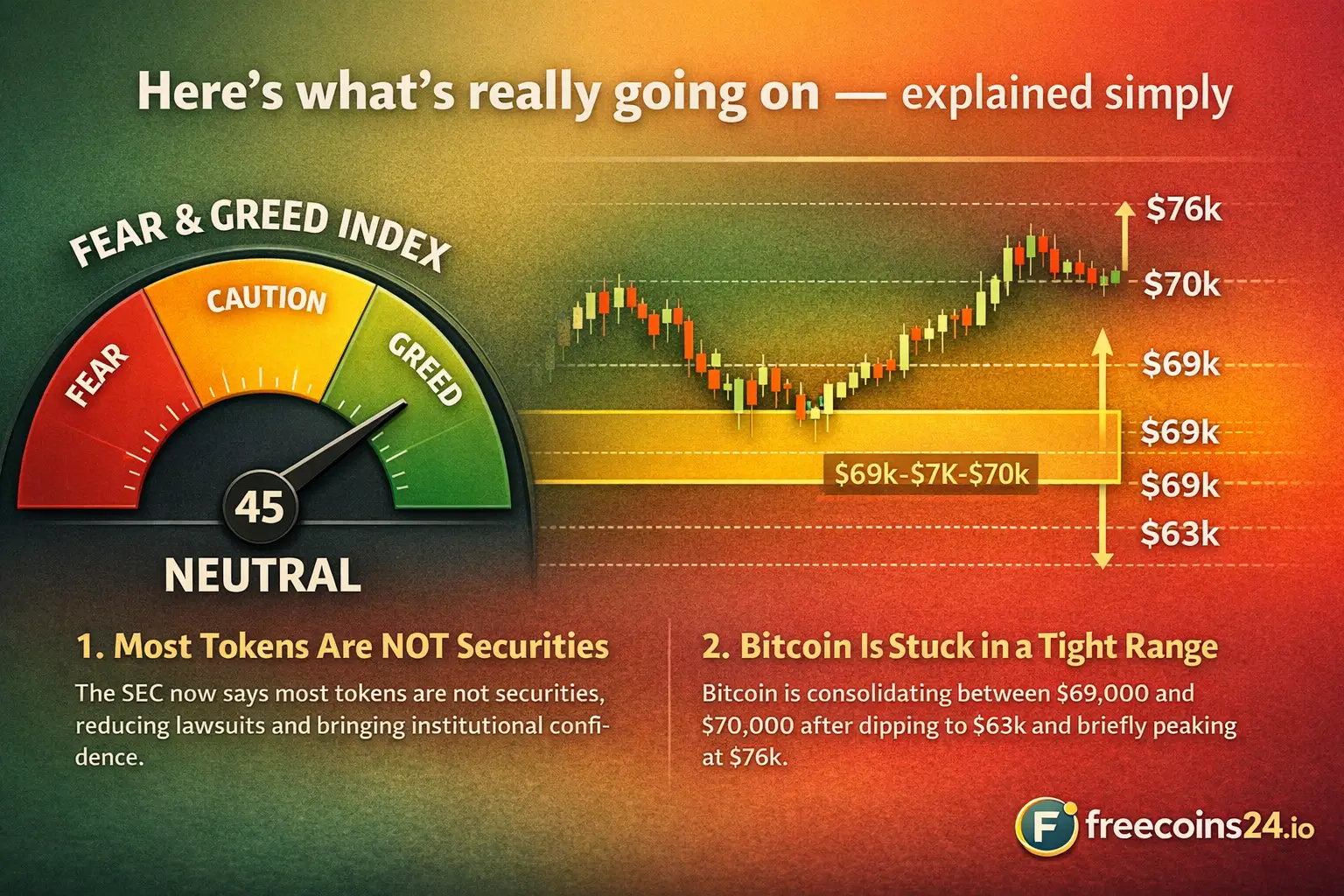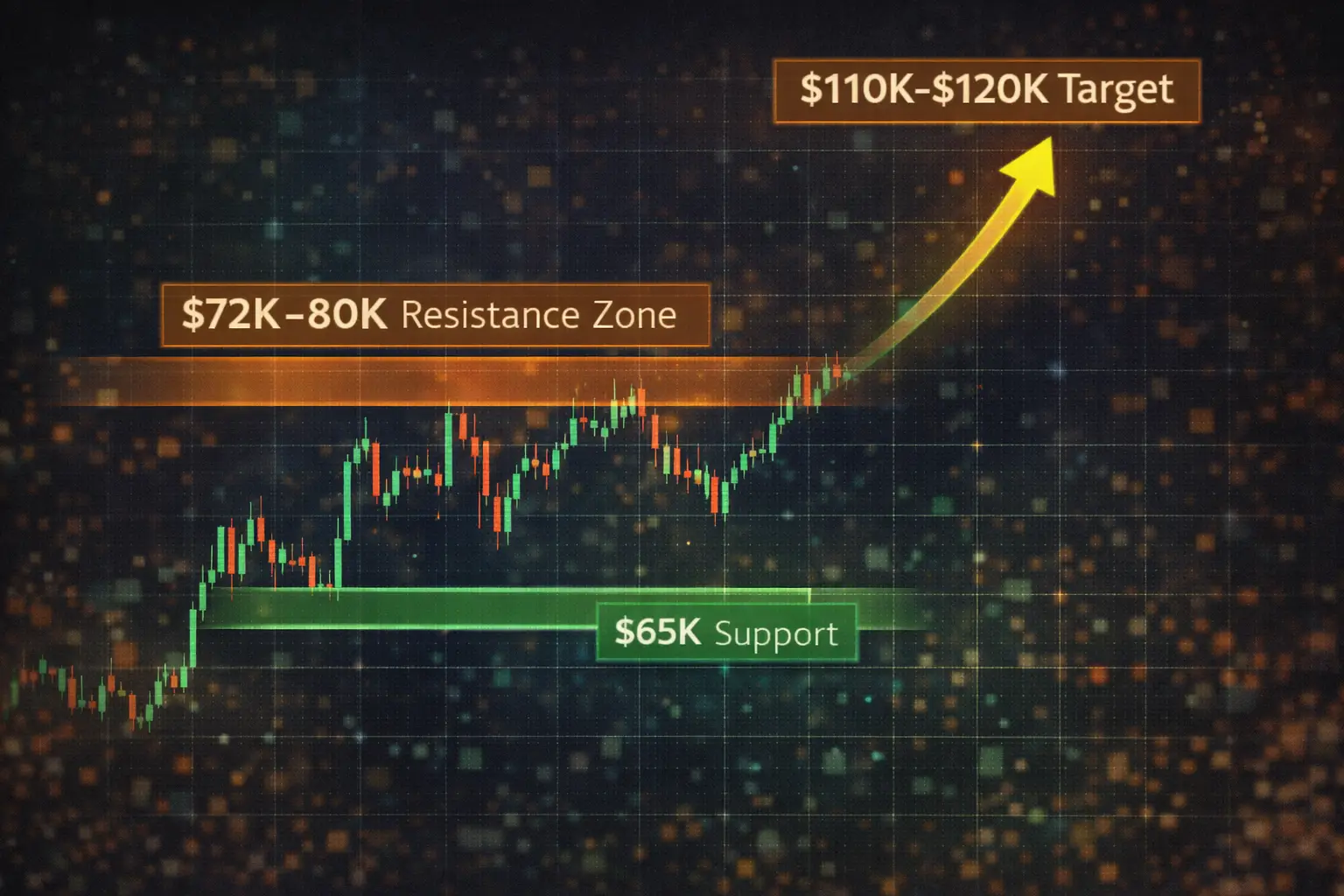
The crypto market from mid-February to April 2026 feels like a tale of two worlds. Bitcoin is consolidating in a tight range of $70,000 to $75,000 and is struggling to break out. Meanwhile, smarter money is quietly rotating into narratives that offer real utility and structural upside.
The meme coin era has cooled down like never before. We’re seeing a clear shift toward AI agents, privacy layers, stablecoins, and restaking, offering 4X the expected outcome. These four pillars are delivering a sustainable yield even when Bitcoin is pulling a sideways move as we speak.

1. AI Agents: The New Utility Narrative
CT is full of AI trends thanks to its magnetic pull on Openclaw and Anthropic Claude. Newcomers and veterans alike are creating interesting apps and bots without the need for keyboarding, as was the case a decade earlier. Those are having a significant impact on the crypto narrative.
AI agents are autonomous programs that are taking off. They can trade, optimize yields, manage portfolios, or even coordinate with other agents without constant human input.
Key projects making real progress in 2026:
- Bittensor (TAO): A decentralized machine learning network that rewards useful AI models through subnets. It leads in performance-based intelligence.
- Artificial Superintelligence Alliance (ASI / FET): Combines agents, data, and compute for machine-to-machine economies.
- Render Network (RENDER): Decentralized GPU marketplace solving the AI compute shortage.
- NEAR Protocol (NEAR): User-friendly Layer-1 focused on practical agentic commerce.
- Virtuals Protocol (VIRTUAL): Easy launchpad for creating, tokenizing, and monetizing autonomous AI agents.
2. Privacy Coins: The Essential Moat for AI Agents
This new market rotation is not limited to AI agents only. Privacy coins have outperformed the broader market in late 2025 and early 2026. ZEC is testing new lows but quickly recovering new picks as the demand is unstoppable with strong rallies. By the same performances, XMR is steadily waking up!
- Monero (XMR): Default, battle-tested privacy using ring signatures and stealth addresses — the gold standard for sovereignty.
- Zcash (ZEC): Optional shielded pools with zk-SNARKs— more flexible for “compliant privacy” and institutional use.
- Emerging layers like Aztec, Railgun (RAIL), and Zama/Fhenix (FHE) bring contract-level privacy to DeFi and smart contracts.
Agents dealing with sensitive decisions need encrypted execution, zero-knowledge proofs, and secret management. Privacy tech (ZK-ML, FHE) allows transparent discovery with confidential action. In 2026, privacy serves as both a defensive hedge and an enabler for scalable agent economies.
3. Stablecoins
While Bitcoin has been range-bound, stablecoins continue setting records.
- Total market cap: Around $310–$317 billion as of early April 2026, with steady growth toward $1 trillion.
- Dominance: USDT (~$184B) and USDC (~$74–$78B) control over 90% of fiat-backed supply.
- Transaction volumes: Massive real-world utility, with annual figures exceeding $33 trillion.
Stablecoins act as programmable on-chain dollars and defensive liquidity. Capital moves into them when BTC is weak, helping trading, cross-border payments, DeFi, and more and more AI agent micropayments (per-inference or task settlements). They provide the reliable rails that keep the ecosystem moving even when Bitcoin is quiet.
4. Maximizing Yield: Stablecoin Staking and Restaking Strategies
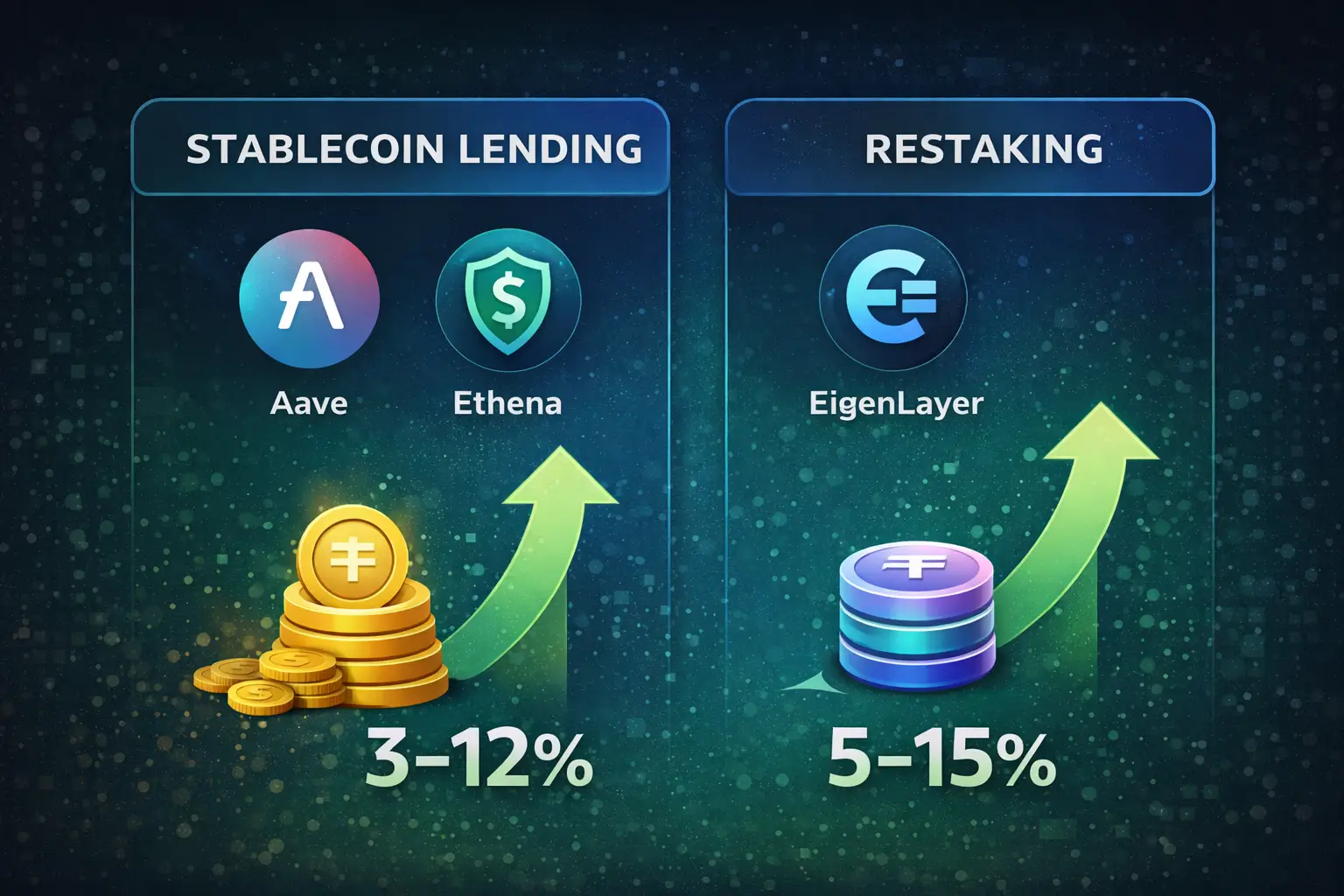
With stablecoins providing steady liquidity, the next step is putting capital to work. Stablecoin Yields (Lending & Protocol-Native) Sustainable APYs typically range from 3–8%, with optimized or synthetic options pushing 10% and more.
- Aave V3 and Morpho: Reliable supply rates on USDC/USDT (often 4–12% in optimized vaults).
- Pendle Finance: Yield tokenization for fixed or leveraged exposure (up to 14%+ in strong pools).
- Ethena (USDe / sUSDe): Yield-bearing synthetic dollar with funding-rate boosts (4–10% base).
Restaking for Layered Yields: Restaking adds security premiums on top of ETH staking.
- EigenLayer: The leader with massive TVL (~$18–$20B+). Restaked yields often 5–15% total (base staking + AVS rewards).
- Ether.fi, Renzo, Puffer, and Symbiotic: Liquid restaking tokens (LRTs) for flexible exposure, with yields commonly in the 4–12% range.
To make the investment strategy more magnetic, you can combine stablecoin lending for baseline income with restaking on ETH for a diversified upside. Always monitor utilization, funding rates, and AVS rewards; higher yields always come with higher risks (slashing, smart contract issues, and de-pegs).
5. What to Hold Onto Next
To position yourself for the ongoing rotation and avoid chasing faded narratives, focus on these high-utility categories with real adoption momentum in 2026:
- Privacy Protocols & Coins: Essential for a surveilled and agent-heavy world. Monero (XMR) for default anonymity and Zcash (ZEC) for flexible shielding. Watch layers like Aztec and Railgun for DeFi/private smart contracts.
- Restaking Platform Coins & Ecosystems: Yield generation is becoming a core basic. You can try the EigenLayer (EIGEN) restaking protocol to experience high yield on your stablecoins.
- AI Agents & Supporting Infrastructure: Move beyond speculative tokens; Bittensor (TAO) and Virtuals Protocol (VIRTUAL) are driving the AI hype like never before on-chain. Having them on the watch would be beneficial.
Final Thoughts
Utility hype and meme pumps cycle are over in crypto. AI agents and the need of privacy have taken off while whales are staking up their stablecoin holding and maximing on it. Stablecoins provide the rails and liquidity that keep things moving during BTC consolidation. Yield strategies let you earn while participating.
For more information on AI, privacy, and yield strategies, please visit our AI Crypto category.
Want More Free Airdrops?
Fresh drops every day — Solana, L2s, perps. Airdrop Calendar Here
Stay Updated
Alerts & real talk:
- Twitter: @FreeCoins24
- Telegram: t.me/FreeCoins24 Come hang.
FAQ
Q1: Why is the market moving away from memes?
Projects with real utility and infrastructure (AI agents, privacy, stablecoins, restaking) are gaining traction as speculation fades.
Q2: What distinguishes AI agents from regular AI tools?
They are self-sufficient, able to plan, decide, and carry out tasks such as trading and yield optimization.
Q3: Why is privacy critical for AI agents?
Agents involved in sensitive decisions must safeguard strategies and data. Privacy coins and layers allow for secure execution on transparent blockchains.
Q4: What is the size of the stablecoin market in 2026?
Around $310-317 billion, with forecasts of reaching $1 trillion or more later this year due to real-world utility in payments and DeFi.
Q5: What is restaking, and why is it important?
Restaking allows you to earn additional yield by securing new services on top of ETH staking. It adds layered returns (typically 5-15%) but carries higher risks.
Q6: What AI agent projects should I follow?
Bittensor (TAO), ASI/FET, Render Network (RENDER), NEAR, and Virtuals Protocol (VIRTUAL) have the most real-world adoption.
Q7: Is now a good time to earn yield from stablecoins?
Yes, sustainable APYs range between 3 and 8%, with optimized strategies pushing higher. Always check the current rates and risks.
Q8: How should beginners allocate resources in this rotation?
Begin small. Combine stablecoin yields for safety, restaking for upside, and AI/privacy projects for growth. Don’t invest more than you can afford to lose.
Q9: Which metrics should I track?
Active agents, GPU hours used, shielded transaction volumes, restaked TVL, and stablecoin volumes all reflect actual usage rather than hype.
Q10: Has the bull market ended?
No, it is rotating. BTC consolidation frequently precedes significant movements in high-utility sectors such as AI, privacy, and yield.