If you’ve ever farmed an airdrop, claimed your tokens, and then watched the price plummet immediately after launch, you’re not alone. Market volatility transforms what appears to be free money into a rollercoaster ride, sometimes resulting in a quick profit, but more often in a painful timing lesson. We’ve seen this play out repeatedly in 2025 and early 2026, massive distributions like Lighter’s $675 million LIT drop or various perp DEX phases where tokens spiked pre-launch and then bled hard post-claim.

Volatility affects more than just prices; it also alters the true value of your rewards, launch dynamics, and long-term profitability. Today, we’ll explain how market turbulence influences airdrop claim value and token launch prices in layman’s terms, using real-world examples from recent cycles.
1. Why Volatility Changes Airdrop Profitability
Airdrop volatility is at its peak right around claim time. Tokens in calm bull markets typically hold or pump after launch as hype builds. However, in choppy or bearish conditions, such as much of 2025, volatility increases sell pressure.
The majority of recipients are short-term farmers looking for a quick fiat or stablecoin exit. When everyone dumps at once, high turbulence causes wider spreads, thinner liquidity, and more slippage. According to data from 2025, 84-88% of newly launched tokens traded below TGE (token generation event) prices, with medians dropping by 70% or more within months.
During volatile periods, people panic sell free tokens in order to lock in profits or cut losses, causing supply to flood. Projects with a high FDV (fully diluted valuation) suffer the most, as overinflated launches result in immediate 50-90% drops. Meanwhile, stable markets allow utility narratives to develop, sustaining prices for longer periods of time.
2. Common Price Movements After Token Distribution
Post-claim patterns repeat across cycles, especially in high-vol environments:
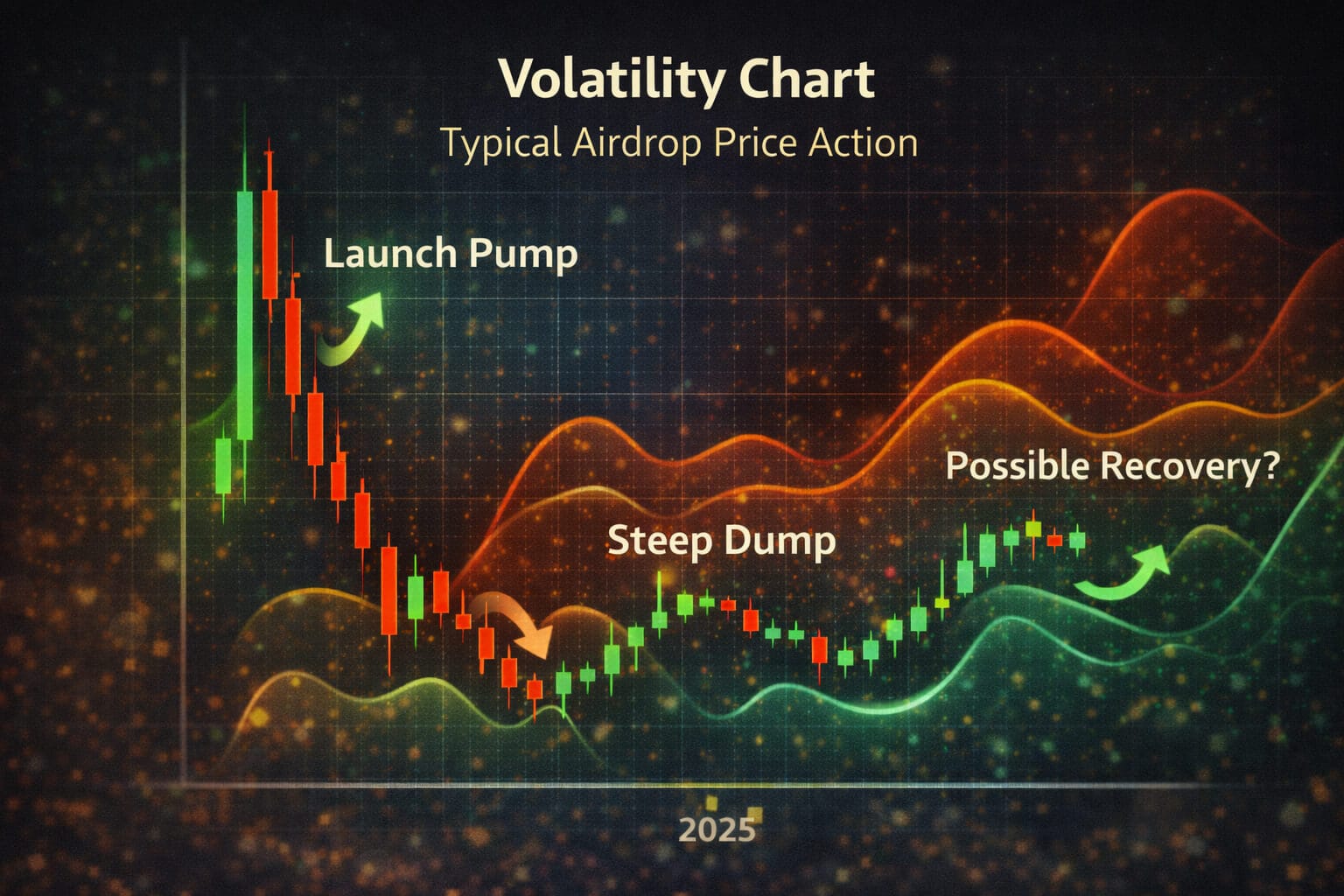
- Immediate Pump and Dump: Pre-TGE hype and thin books always lead to a spike (e.g., Lighter LIT hit $7.80 briefly then stabilized at ~$2.60-3.00 after $675M distribution). Many recipients emphasize their strength.
- Sharp Decline Phase: 74-85% of 2025 airdrops traded below launch price. Median losses are ~70% within months. Examples: Multiple tokens down 96-99% (M3M3, Elixir), even strong names like Jupiter fell 75%+ from peaks.
- Dead Cat Bounce: A brief recovery on listings or news, then fade if volume drops (common in perp DEX drops such as Aster or Lighter phases).
- Rare Holdouts: Projects with high utility, phased unlocks, or anti-dumping mechanics (staking requirements) perform better; prices stabilize or recover slowly.
In turbulent markets, these moves accelerate; wider swings mean bigger initial dumps but also sharper rebounds if sentiment flips.
3. How To Estimate Post-Claim Token Value
Guessing claim value in volatility is part art, part data. Here’s a newbie-friendly approach:
- Check the pre-launch FDV vs. circulating supply: high FDV combined with low float results in a high dump risk.
- Look at similar drops: 2025 data showed average 10-15% dips post-TGE, but volatile ones hit 70%+ losses quickly.
- Monitor on-chain: whale sells, unlock schedules, vesting cliffs. Tools like Bubblemaps or Dune show early distribution and sell pressure.
- Factor market mood: In risk-off (like late 2025 corrections), expect faster dumps. Risk-on? More room for pumps.
- Calculate realistic exit: Assume a 30-70% haircut from launch price in choppy conditions. It’s better to claim and sell into strength than hold, hoping for miracles.
4. Strategies to Protect Your Airdrop Earnings
Volatility won’t disappear, but you can play smarter:
- Claim and Sell Immediately: If you’re a farmer, take profits fast, most airdrops lose value short-term. Convert to stables or BTC.
- Staged Selling: Sell 30-50% at launch spike, hold rest for potential recovery/utility plays.
- Hedge Positions: Use perps on Bitunix or similar to short the token briefly while holding spot, delta-neutral-ish.
- Focus on quality farms: Prioritize projects with vesting, anti-Sybil filters, or real utility (staking rewards, governance), they resist dumps better.
- Time Claims: If phased, wait for calmer markets or positive catalysts.
- Diversify: Don’t put all eggs in one drop; spread across 5-10 to smooth volatility.
5. What To Expect in High-Volatility Markets
2026 looks choppy so far, macro uncertainty, rotations, and post-2025 fatigue mean more turbulence. Expect:
- Faster dumps: Sell pressure hits harder with thin liquidity.
- Wider swings: 20-50% intraday moves common post-claim.
- Fewer moonshots: High FDV + volatility caps upside for most.
- Better filters: Projects shifting to points/utility-based drops reduce pure dumps.
Conclusion
In summary, airdrop volatility turns free rewards into high-stakes bets. Understand the patterns, protect your stack, and trade smart. Head to our Airdrops category for more guides on navigating these wild waters.
Stay Updated
Instant crypto scoops, airdrop alerts, volatility tips:
- Twitter: @FreeCoins24 – Fast hits and buzz.
- Telegram: t.me/FreeCoins24 – Exclusive chats and gems. Join in the next big one might be here!