
Crypto casinos understand exactly what digital users want to hear.
Speed matters. Privacy matters. Direct wallet access matters. Fewer banking layers sound attractive. A cleaner payment experience sounds even better. Compared with older online casinos, crypto platforms often present themselves as a more modern answer to the same product.
That message works because it connects with a real shift in user behavior.
People who move through crypto are already used to wallets, stablecoins, fast transfers, and a more self-directed relationship with money. They do not want slow payment rails, rigid onboarding, or systems that feel stuck in a different internet era. When a casino presents itself as fast, borderless, and user-first, the appeal is obvious.
At first glance, it looks like a natural upgrade.
The interface feels lighter. Payment options look broader. Deposits move quickly. The branding is sharper. In many cases, the platform appears more aligned with the expectations of crypto-native users than traditional gambling sites ever were.
That first impression is powerful.
It is also incomplete.
A growing part of the market has started to notice the same thing: many crypto casinos succeed at selling a Web3 image, but fewer deliver a genuinely better trust experience once real money is involved. The difference becomes clearer over time, especially when withdrawals, verification, and rule enforcement enter the picture.
This is where the gap starts to widen.
The onboarding layer is doing most of the work
Crypto casinos usually win the first few minutes.
The entry experience is designed to feel smooth. Deposits are fast. Navigation is simple. Registration is often lighter than on older fiat-first platforms. Even the visual language supports the idea of efficiency. Everything is built to create momentum.
That part is intentional.
A strong first impression increases trust, reduces hesitation, and pushes the user forward before deeper questions appear. From a conversion perspective, it makes perfect sense.
From a research perspective, it tells only a small part of the story.
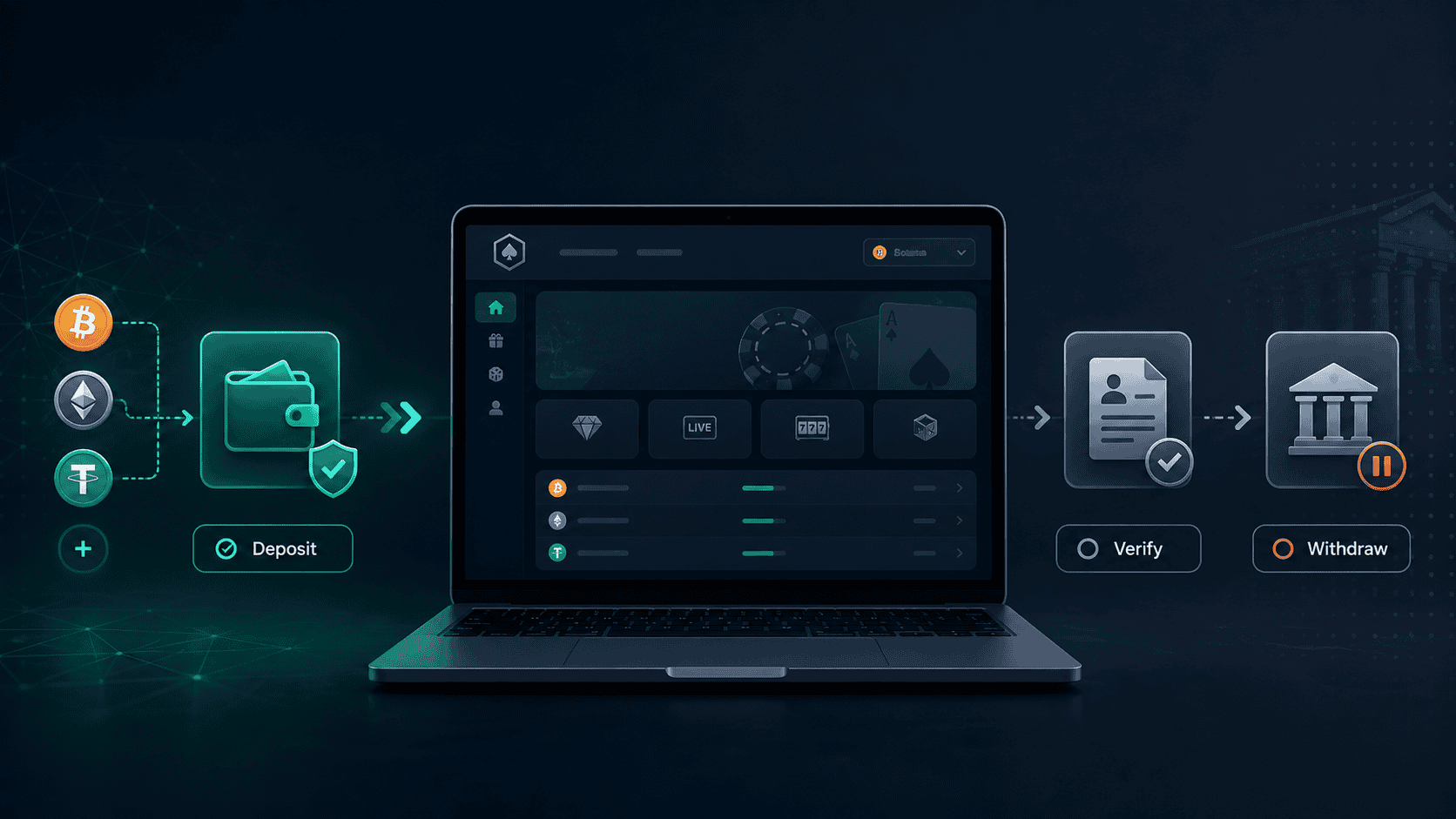
Easy access does not automatically mean reliable system behavior. A fast deposit flow proves that the platform can receive funds efficiently. It says very little about how the same platform handles withdrawals, disputes, account reviews, or payout-stage friction.
This distinction matters more than most casual users expect.
A platform can look modern, support multiple crypto assets, and still become unclear at the moment when the user wants to move funds back out. That is one reason more players are shifting away from purely bonus-based rankings and toward deeper trust-first analysis such as best crypto casinos, where the focus moves closer to platform behavior rather than surface-level marketing.
A crypto aesthetic does not guarantee a crypto-standard experience
This is the core issue.
Many platforms borrow the language of crypto very well. They talk about freedom, efficiency, privacy, and speed. They build around familiar assets. They reduce friction where it is most visible. On the surface, everything points toward a better user model.
Underneath that layer, older patterns often remain intact.
The deposit side is polished. The payout side is less predictable. Verification may stay invisible until a withdrawal request appears. Support can feel responsive during signup and much slower when the issue involves real balances. Terms that barely mattered at entry can suddenly become central later.
From the user’s side, that creates a simple conclusion: the platform felt more advanced than it actually was.
This is not always about deception. In some cases, it comes down to weak internal systems, inconsistent compliance handling, or poor communication. The cause may vary, but the outcome feels similar. The experience changes at the point where trust matters most.
That is a problem for a sector built around digital efficiency.
Crypto users are usually more sensitive to execution quality than the average casual customer. They already understand settlement, wallet control, network speed, and transaction flow. Because of that, they notice very quickly when a product feels modern only during deposit and much more traditional once payout friction appears.
The real test begins at withdrawal
A casino reveals its true character later in the cycle.
The first stage is easy to optimize. The second stage exposes the real structure.
Withdrawal is the point where marketing loses power and system design becomes visible. This is where users discover whether timelines are handled well, whether rules are clearly communicated, and whether the platform behaves consistently when a winning balance needs to leave the ecosystem.
That is also the point where many casual reviews become less useful.
Game count does not help here. Provider logos do not help either. A polished homepage does not answer payout questions. Even broad crypto support tells only part of the story.
A more useful evaluation starts with a different set of signals:
- consistency of withdrawals
- clarity around limits and checks
- stability of support during sensitive cases
- timing of verification
- pattern of complaints around payout handling
Those factors shape the real user experience much more than onboarding convenience alone.
For that reason, the most valuable question in crypto casino research is often very direct: do these platforms handle payouts in a way that matches the promises they make at the start? That is exactly where articles like do crypto casinos really pay out? become more useful than another recycled top list.
“No KYC” sounds simple, but the reality is more layered
Few labels create more immediate interest than “no KYC.”
The phrase is effective because it connects with familiar crypto values. It suggests lighter access, stronger privacy, and less dependence on old financial habits. Many users hear it and assume they are looking at a platform built around freedom rather than gatekeeping.
In practice, the situation is more complex.
Verification itself is not unusual in gambling. Compliance, fraud prevention, regional restrictions, and source-of-funds checks are all part of the operating environment. The real issue is not the existence of checks. The real issue is how and when they appear.
A clearly explained verification process creates one type of experience.
A delayed verification trigger creates another.
That difference shapes trust more than the label itself.
If a platform explains its rules early, applies them consistently, and keeps the process predictable, most users can make an informed decision. If the same platform feels frictionless at entry but becomes document-heavy only after a win or a cashout request, the user experience changes completely.
This is where many frustrations begin.
The problem is less about documents and more about timing. Delayed friction feels very different from transparent friction. One feels like part of the system. The other feels like a barrier introduced at the moment of leverage.
That is why better users are becoming more careful with simple labels. They want to know how the system behaves over time, not just how it advertises itself on day one.
Platform trust is built through consistency
Trust in crypto gambling is rarely created by one feature.
It comes from repetition, predictability, and the absence of unpleasant surprises. A strong platform feels coherent from deposit to withdrawal. The tone stays stable. The process remains understandable. Support does not change personality as soon as money needs to leave.
This is where many operators still fall short.
They invest heavily in the front layer because that is where user acquisition happens. The back layer gets tested only after the player has already committed funds. If communication becomes vague or timelines stretch without clear explanation, the damage is much larger than a simple operational delay. At that point, the platform starts undermining its own brand.
For crypto users, consistency is part of credibility.
A product that feels smooth only in one direction is incomplete. A product that speaks the language of efficiency but produces uncertainty during payout does not fully meet the standard it is trying to claim.
This is also why research quality matters more than ever. Generic casino content often repeats the same shallow framework: bonuses, games, payment logos, welcome offers, mobile compatibility. Those details have their place, but they do not tell users how the system behaves in stressful moments.
A better framework puts more weight on operating reality.
Provably fair covers one layer, not the whole system
Provably fair remains one of the strongest concepts crypto introduced into gambling.
Used properly, it gives players a more direct way to verify elements of game fairness. That is a real improvement. It helps reduce blind dependence on trust and gives users better visibility into specific mechanics.
Still, it solves only part of the larger trust question.
Game integrity matters. So does payout integrity. The two are related, but they are not identical. A platform can offer fair game mechanics and still disappoint users with weak withdrawal handling, poor communication, or uneven rule enforcement.
That is why experienced users tend to think in layers.
They look at fairness. They also look at payout behavior, verification logic, complaint patterns, and the broader relationship between player and operator. A single feature, even a valuable one, cannot carry the entire trust model by itself.
This is one of the main differences between surface-level content and serious evaluation. One stays focused on isolated selling points. The other looks at how the full system behaves under pressure.
The market is becoming harder to impress
That change is healthy.
A few years ago, many users were satisfied with crypto support alone. Accepting BTC or USDT already felt advanced. Today that standard is weaker. The market has seen enough platforms to understand that crypto payments by themselves do not solve the deeper trust problem.
Users are learning faster.
They understand that fast deposits are common. They understand that large game libraries are easy to advertise. They understand that modern design can hide weak processes. Most importantly, they are learning to judge platforms based on the harder part of the journey rather than the easiest one.
This puts pressure on the sector to improve in more meaningful ways.
The next strong wave of platforms will not stand out because they use the loudest Web3 language. They will stand out because they reduce uncertainty where it matters most. They will explain verification clearly. They will keep payouts predictable. They will treat user trust as an operating standard rather than a visual theme.
That is where competitive advantage will come from.
Better research starts with better questions
A smarter evaluation model changes the whole conversation.
Instead of asking only:
- How big is the bonus?
- How many coins are supported?
- How many games are listed?
- How sleek is the interface?
A stronger framework asks:
- How stable are withdrawals?
- How early are rules explained?
- How consistent is support during payout cases?
- Are complaints repetitive and pattern-based?
- Does the platform still feel fair once real balances are involved?
Those questions produce much better filters.
They also lead to much better content. Readers gain more value from structured trust analysis than from another promotional ranking page that says the same things as every other site in the niche.
The market no longer needs more polished descriptions. It needs more signal.
Final thought
Crypto casinos have mastered the visual language of progress.
They know how to present speed, flexibility, and lower friction in a way that feels perfectly aligned with the crypto mindset. That part is already well developed.
The harder challenge sits deeper in the product.
A real upgrade is not measured by how easy it is to enter. It is measured by how consistently the system behaves once the player wants to leave with funds, resolve an issue, or understand the rules at a more serious level.
That is the difference between a platform that looks crypto-native and a platform that actually earns trust from crypto users.
As the sector matures, that difference will matter more and more.
The winners will not be the ones with the loudest claims.
They will be the ones whose systems remain clear, stable, and fair when money is under pressure.