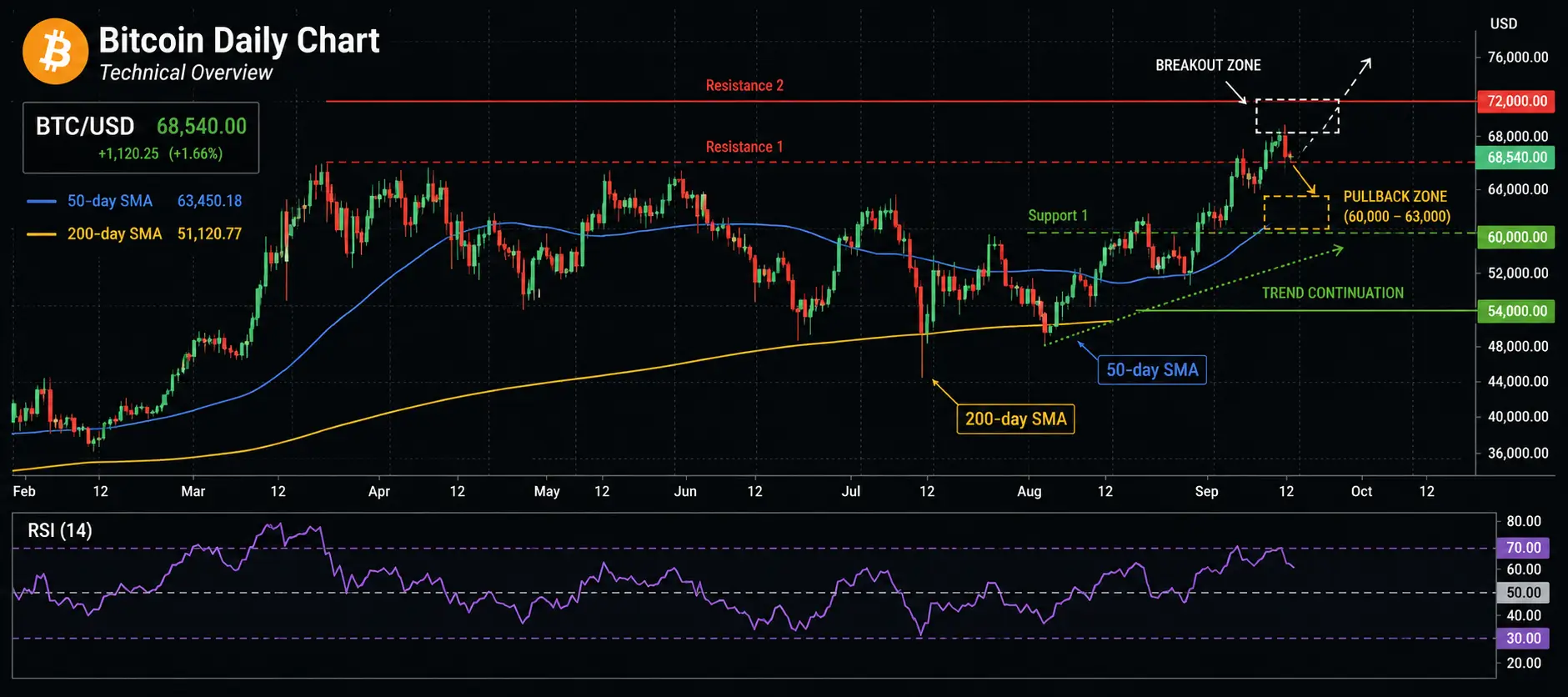

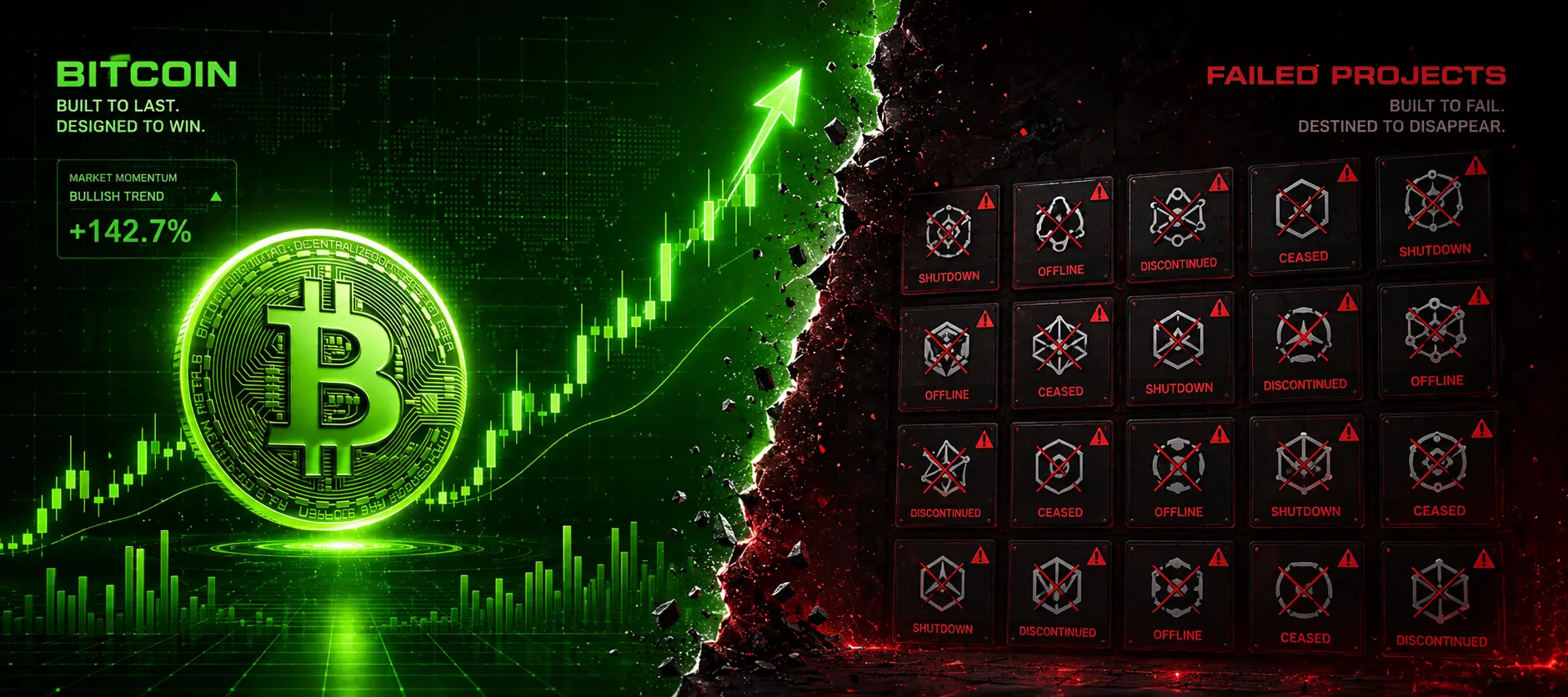
Bitcoin is finally showing some green again folks!
It’s stabilizing near the $64,000 level. Long-term holders are holding firm and early accumulation signals are appearing on the charts. The broader market is starting to look healthier on the surface.
But when you look a little closer, a different story is unfolding. The most unprecedented shutdowns are happening on an accelerated speed in 2026. The number of orderly exits has already climbed into the 60-80 range and keeps rising. This year is already outpacing comparable periods from the last bear market.
Let’s find out what could go wrong in this article!

The Shutdown Wave and the BitMEX Shock
The list of recent crypto projects’ closures is long and real.
Very recent names include Dango (the perps DEX and L1 that is winding down after only about three months), BitMEX (announced 23 July), ODOS (the DEX aggregator retiring on 30 July), Movement Labs (Chapter 11 filing on 22 July), SecondFi, Xenea, AscendEX, Zapper, Ctrl Wallet and a longer list.
Earlier this year we already saw Loopring, Polygon zkEVM, Radiant Capital, Everclear, Swell, Zero Network, Botanix, Tally, Magic Eden Wallet, Leap Wallet, Syndicate, Foundation, and many more across L2s, wallets, DeFi, tooling, and gaming going extent.
Among all of them, BitMEX stands out as the most striking and scary. The closer annoucement is a clear signal that something is going off in the industry although market is looking good again.
Here, we’re talking about the creator of 100x perpetual swaps in 2016. Bitmex once dominated the entire crypto derivatives market. It ran for more than eleven years with a clean security record and zero major hacks. Yet it is still exiting.
That fact alone should make every builder and investor pause and ponder before hoping into any project launch.
Why BitMEX Is Shutting Down
The parent company HDR Global Trading Limited completed a strategic review of the business and the broader crypto industry. The decision is to close BitMEX effective 23 September 2026 at 04:00 UTC.
New accounts were blocked immediately. Users were urged to close positions and withdraw funds. Later stages only allow position reductions. The company has confirmed surplus reserves to handle the wind-down cleanly.
However, the underlying causes are more revealing. BitMEX gradually lost market share and volume to larger centralized exchanges and newer decentralized perps platforms. Liquidity, market makers, and whales slowly migrated away. By 2026 the residual volumes and market share had collapsed to almost nothing (well under 0.01%). Higher operating costs and a more mature, competitive landscape made continuing uneconomic.
This is a responsible, orderly exit by a true pioneer. That is exactly why the wider pattern matters more.
Common Patterns Behind the 2026 Shutdowns
Looking across the full list, five clear patterns keep repeating.
1. No viable commercial path or product-market fit
Dango openly stated it could not find a commercial path. ODOS saw volumes collapse from multi-billion peaks. Many short-lived protocols simply never found real demand beyond temporary incentives.
2. Mercenary or collapsing liquidity and usage
DeFi names like Radiant Capital, Everclear, Swell, Ionic, and Angle watched activity evaporate the moment incentives dried up. Smaller L2s such as Zero Network and Botanix suffered the same fate.
3. Runway exhaustion
Movement Labs raised significant capital but still filed for Chapter 11 with limited remaining assets and very low fee revenue. Multiple other projects simply ran out of money.
4. Fierce competition in overcrowded niches
L2 and zk solutions (Polygon zkEVM, Loopring), wallets (Ctrl Wallet, Magic Eden Wallet, Leap Wallet), aggregators (ODOS, Zapper), and tooling or governance platforms (Tally, Syndicate, Foundation) all faced too many competitors chasing the same limited attention.
5. Persistent structural and macro liquidity pressure
Even while Bitcoin turned green, overall speculative capital and trading volumes remained constrained. Weaker models simply could not survive the tighter environment.
These patterns rarely appear alone. They usually combine into a predictable death spiral because when incentives fade, users leave, revenue collapses, runway shortens, and the team is forced to close. These happens under no pressure.
Risk Controls and How to Spot Projects on the Verge
The 2026 shutdown wave gives us a practical checklist.
- Demand real recurring revenue or clear unit economics, not just TVL, users, or points.
- Assess the quality of activity. Ask the question around organic and retain activity, or purely mercenary.
- Check treasury transparency, burn rate, and remaining runway.
- Evaluate competitive moat in crowded categories such as L2s, wallets, aggregators, and niche DeFi.
- Monitor team activity, development cadence, and communication quality.
- Prefer projects with proven network effects, strong integrations, or genuine ongoing utility.
- Use proper position sizing and clear exit rules. Even established names can reach the end (the BitMEX lesson).
Treat this checklist as non-negotiable in the current crypto environment. No project is guaranted to sustain till the next bull market. Beware and treat your capital as last ressort of a hard market economy.
Final Thoughts
The market can print green while the project graveyard keeps growing. What we are seeing is creative destruction and industry maturation.
BitMEX’s clean exit after defining an entire category is the clearest single symbol of this shift. The projects that survive will operate in a leaner, higher-bar environment where real utility and sustainable economics matter more than narrative or incentives.
You can find out more market analysis and project updates in our Market Insights category.
Stay Updated
Follow us on X at @FreeCoins24 and join our Telegram at Telegram for daily alerts, honest market takes, and the latest airdrop updates.
FAQ: Crypto Project Shutdowns 2026
Why are so many projects shutting down while Bitcoin is green?
The market is maturing. Weak models are being cleared even as price recovers. This is structural cleanup, not pure bear market pain.
What makes the BitMEX shutdown so significant?
BitMEX invented 100x perps and ran for over 11 years with a clean record. Its orderly exit shows that even pioneers can reach the end when market share collapses.
What are the main patterns behind the shutdowns?
No commercial path, mercenary liquidity, runway exhaustion, overcrowded niches, and structural liquidity pressure. These usually combine.
How can I avoid projects that are about to shut down?
Focus on real revenue, organic activity, transparent treasury, competitive moat, active development, and proper position sizing.
Is Dango’s shutdown a big warning sign?
Yes. A perps DEX and L1 closing after only about three months shows how fast models can fail without product-market fit.
Are L2s and wallets especially at risk?
Many are, because the categories are overcrowded and competition is intense. Only those with clear differentiation tend to survive.
Does a green Bitcoin mean the cleanup is over?
No. Green price action can coexist with rising project exits. The two trends are not the same.
What should I do if I hold tokens in a project that announces shutdown?
Follow official instructions carefully, close positions if required, withdraw promptly, and treat any remaining tokens as high risk.
Which types of projects look more resilient right now?
Those with real recurring revenue, strong network effects, genuine utility, and sustainable unit economics.