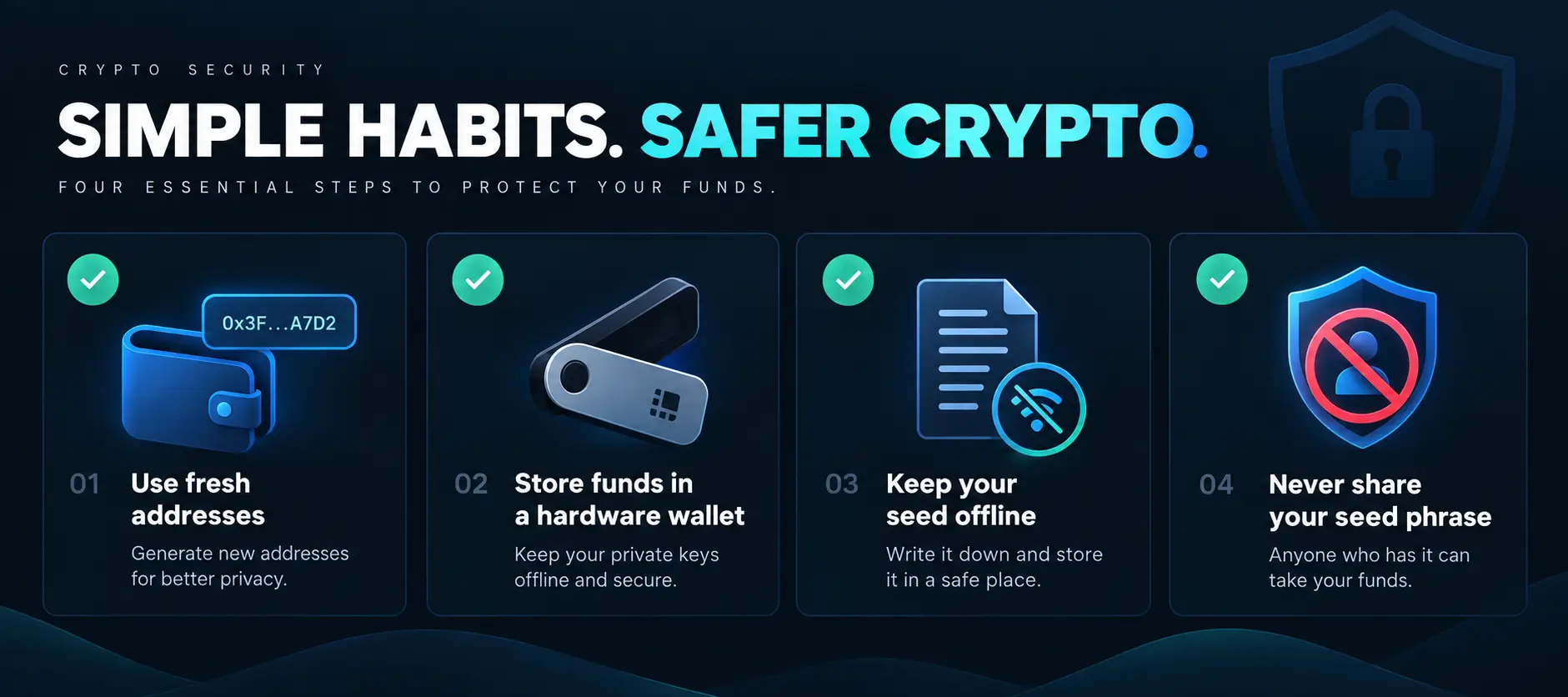
Most people treat their crypto wallet now like a locked drawer and then forget about it.
To be honest, that has worked for a while but might no longer work for long because we have two bigger forces that are moving at the same time against the odd.
That’s the Quantum computers and AI models getting stronger every single day when thousands of gpus are released in the market.
This is is making scams feel more real than ever. Europol just warned that wallets, not the blockchains themselves, are the main point of exposure. At the same time, deepfake support calls and AI-written phishing messages are draining people who thought they were careful.
This guide stays practical. You do not need a physics degree or a new laptop full of experimental software.
1. What the quantum risk really looks like
Quantum computers do not break the entire blockchain tomorrow. According to Europol’s October 2026 reports, it’s clear that hash protected chain (like Bitcoin’s SHA-256) hold up better. The weak spot is the public key cryptography that wallets use to prove ownership.
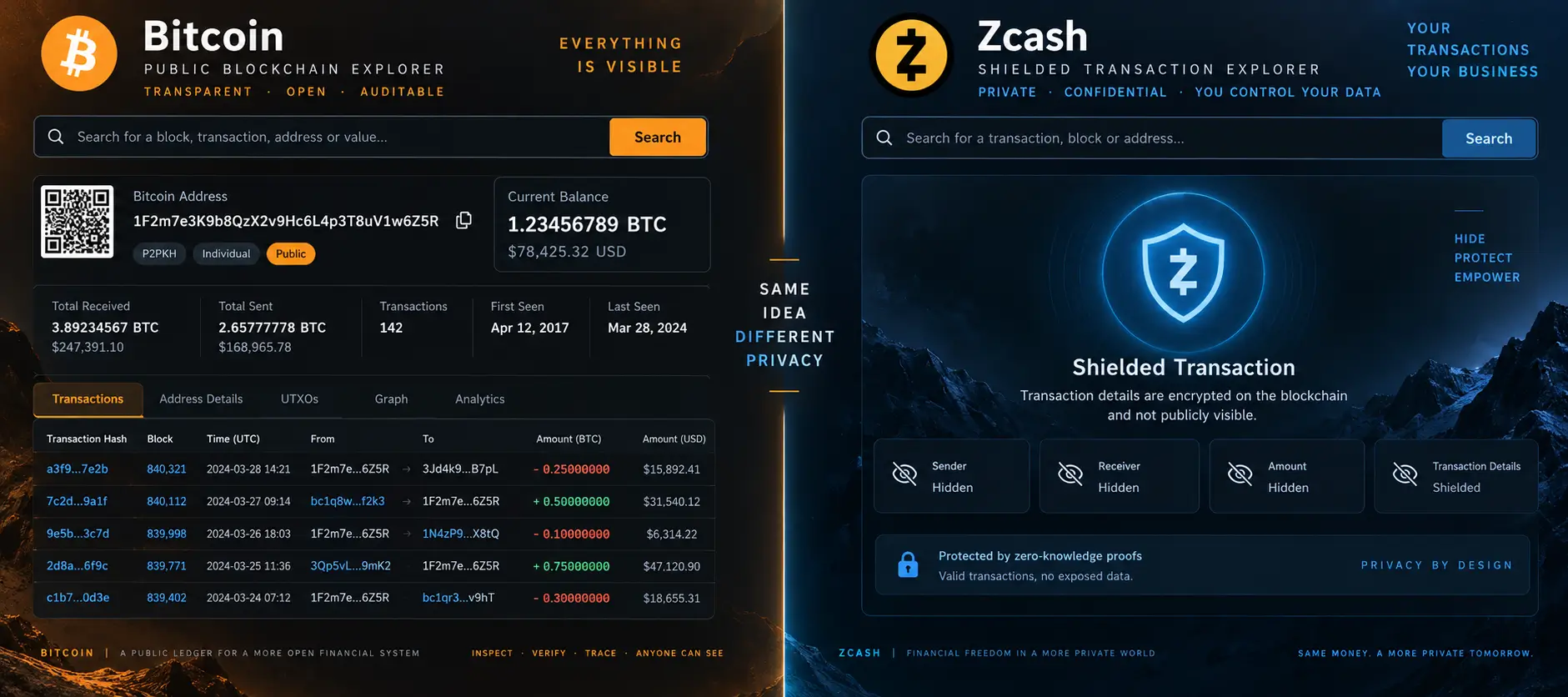
When you spend from a Bitcoin address, the public key becomes visible on-chain. A powerful enough future quantum computer could, in theory, work backward from that public key and recover the private key. Roughly 6 to 7 million bitcoin already sit in addresses with exposed public keys.
That includes old Satoshi-era coins and many addresses that have been reused. Those coins cannot be fixed after the fact. The only real protection is moving them before a capable machine exists.
No such machin is developed yet but the practical point for holders is now is to reduce unnecessary exposure now. Fresh addresses and careful spending habits buy time. They do not require waiting for perfect post-quantum wallets.
2. How AI is raising the everyday threat
AI is already active and becoming a big threat. Scammers no longer need to break encryption when they can convince you to sign something yourself. TRM Labs data shows deepfake-related losses in 2026 already far ahead of last year’s full total.
Fake AI trading tools have also replaced browser wallet extensions on infected computers, turning a familiar MetaMask screen into a seed-phrase trap. AI agents that manage wallets for users create another surface. These are extremely poisoned router that can drain funds without the user typing a seed phrase at all.
[Picture 2 here: Split image showing a deepfake video call on one side and a simple hardware wallet confirmation screen on the other]
3. Address hygiene that actually reduces exposure
If you’re Bitcoin Maxi, then you should care about this part of the blog.
The best you can right now is to generate new bitcoin addresses for each transaction. In fact, Bitcoin modern wallets already generate a new receive address for every deposit. Once an address has sent a transaction, its public key is public. Any leftover coins on that address become more visible to future quantum analysis.
Prefer native SegWit addresses that start with bc1q. These hide the public key behind a hash until you spend. Taproot addresses that start with bc1p reveal the public key earlier, so some holders move large long-term stacks out of them when they are not actively using the privacy features.
On Ethereum and other EVM side, the picture is similar but different. Every account that has ever signed a transaction has an exposed public key. The practical step is simple, avoid signing anything you do not fully understand, and keep large holdings on hardware devices that force you to review each transaction.
4. Hardware wallets and seed phrase rules that still hold
A good hardware wallet remains one of the strongest everyday defenses. The private key never leaves the device. You confirm the destination and amount on its own screen. That stops most remote malware and fake browser extensions from quietly rewriting a transaction.
Enable the passphrase (sometimes called the 25th word) if your hardware wallet supports it and you understand how to recover it. That adds another layer if the physical seed is ever found. Keep firmware updated, but verify the update comes from the official site or the device’s own process, not a random email link.
5. Daily habits against AI-powered social engineering
Slow down when money is involved. A real support agent will never pressure you to move funds to another wallet to verify your seed phrase on a call. Check official channels yourself instead of clicking links from unexpected messages.
Use a dedicated browser profile or a separate device for large transfers. Bookmark the real sites of your exchanges and wallets. Fake AI-generated pages can look perfect now. Before you connect a wallet to any new dApp, confirm the URL character by character and start with a tiny test amount.
If you use AI agents or automated tools that can spend on your behalf, keep the spending limits tight and the recovery path under your control. Review transaction simulations on hardware devices. Revoke old token approvals regularly with a tool you trust. The goal is to make it hard for a single convincing message or a single bad tool call to empty everything.
6. Preparing for the longer post-quantum shift
The industry is working on post-quantum cryptography. NIST has already standardized several algorithms. Bitcoin and Ethereum developers are researching migration paths, though full upgrades take coordination and will not be instant. Some projects are testing hybrid signatures or smart-contract vaults that require an extra post-quantum check before funds can move.
Vitalik Buterin has pushed Ethereum to treat this seriously and early. In early 2026 he laid out a phased quantum-resistance roadmap that covers four vulnerable areas:
- Consensus-layer signatures
- Sata availability
- Ordinary account signatures (ECDSA)
- And many zero-knowledge proofs.
The plan leans on hash-based signatures for consensus, account abstraction so users can switch signature schemes without a hard fork for every change, and longer-term recursive proofs to keep costs reasonable.
More recently, on October 7th, Vitalik added a caution about AI. He noted that AI-accelerated math research could find weaknesses in lattice-based schemes faster than expected. His advice is not to panic-migrate funds today. It is to take both quantum and potential AI risks to cryptography seriously, and to prefer designs that minimize exposure.
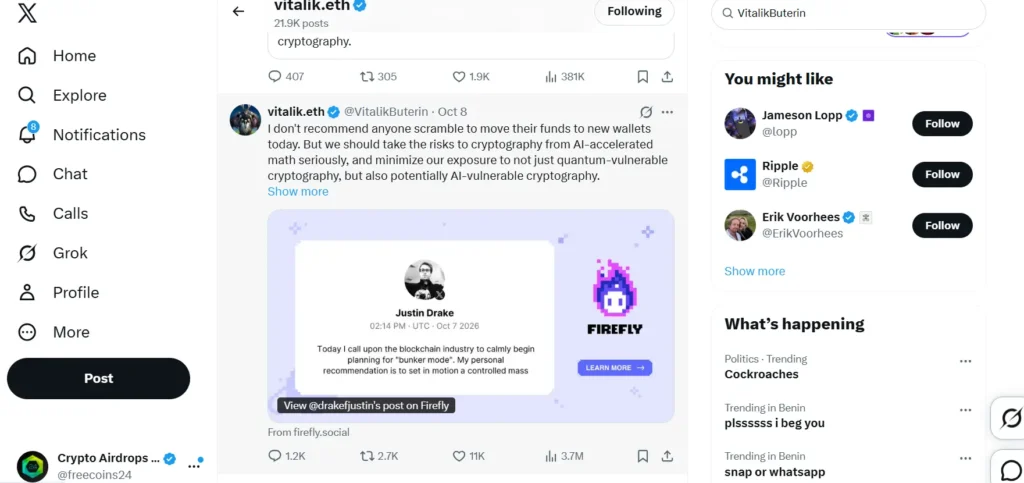
Ethereum’s broader roadmap still targets core post-quantum readiness around late 2029, with staged, opt-in options rather than a single forced switch.
This approach helps the whole space. A clear, public plan on the largest smart-contract chain reduces the chance of a chaotic scramble later.
7. A simple action plan you can start this week
Open your main wallets and note which addresses hold meaningful amounts.
- If any large Bitcoin balance sits on a reused or long-spent address, plan a controlled move to a fresh receive address generated by a modern wallet. Do the same check for any large holdings you have not touched in years.
- Confirm your hardware wallet firmware is current and that you can still recover from the seed phrase you stored offline.
- Test a small send and receive so the process feels familiar.
- Review and revoke old token approvals on the chains you use most.
Finally, tell one trusted person where the physical seed backups live, without telling them the actual words. That covers the human side if something happens to you. The rest is just repeating the same careful habits every time you move funds.
Conclusion
The quantum timeline is still uncertain and the AI scams are already here. The wallets that stay safe longest are the ones whose owners treat both risks as real. It’s high time to pay attention to this matter and act accordingly.
More security and wallet guides live in our Crypto Security category.
Stay Updated
For daily alerts, honest analysis, and the newest airdrop opportunities, follow us on X at @FreeCoins24 and join the conversation on Telegram at t.me/FreeCoins24.
FAQ: Protecting Crypto Wallets From Quantum and AI Risks
Can quantum computers steal crypto today?
No. No public quantum computer can break current wallet cryptography. The risk is future-looking, which is why experts recommend preparing now.
Why does Europol say wallets are the main risk?
Because exposed public keys on wallets could one day let a powerful quantum computer derive the private key. The blockchain’s hash functions are harder to attack.
How many bitcoin are already exposed?
Estimates put roughly 6 to 7 million BTC in addresses whose public keys are already visible on-chain.
Does using a hardware wallet stop quantum attacks?
It stops most remote attacks today. It does not hide a public key that is already on the blockchain. You still need good address habits.
What is the best Bitcoin address type right now?
Native SegWit addresses that start with bc1q hide the public key until you spend. Avoid reusing any address.
How is AI making crypto scams worse?
Deepfake voice and video, personalized phishing, and fake AI tools that replace wallet extensions are all in active use. They target the person, not the math.
Should I move all my coins to a new “quantum-safe” chain?
Not yet for most people. Wait for widely supported upgrades from the wallets and chains you already use. Experimental options carry their own risks.
Is it safe to store my seed phrase in a password manager?
Most security guides still prefer offline paper or metal storage. A password manager is better than nothing, but it is still online and therefore more exposed.
What should I do if someone claims to be support and asks for my seed phrase?
End the call or chat immediately. Real support never asks for a seed phrase, private key, or password.