
October left Bitcoin on a softer footing and November added a political reset.
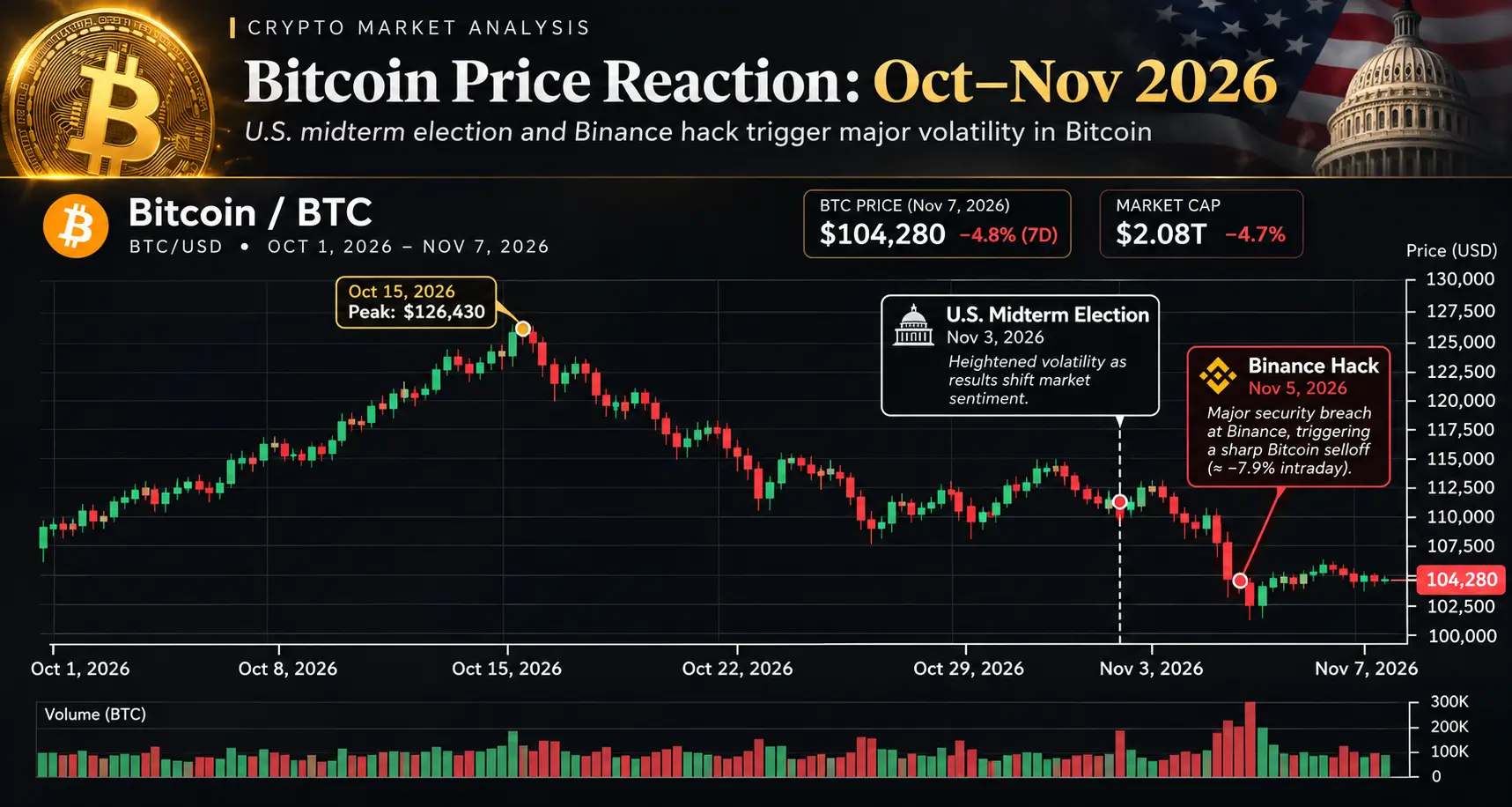
Bitcoin opened October near $83,500 and closed around $77,400, down roughly 7 percent. It briefly touched a high near $87,000 early in the month before sliding toward $76,000.
However, U.S. spot Bitcoin ETFs recorded net outflows of about $515 million. This is its negative month since June. The largest single shock came on 29 October when roughly $6.3 to $6.4 billion was hacked on Binance across multiple chains in about 20 minutes.
1. October Sentiment and the Binance Hack
Soft price action met a major security incident at month-end. Bitcoin finished the month down about 7% after failing to hold early gains. Spot ETF flows turned negative for the first time in several months.
Key October developments
- Bitcoin opened near $83,500 and closed around $77,400.
- It briefly touched a high near $87,000 before sliding toward $76,000.
- U.S. spot Bitcoin ETFs saw roughly $515 million in net outflows, the first negative month since June.
- The Binance incident on 29 October removed roughly $6.3 to $6.4 billion across multiple chains in about 20 minutes.
- Blockchain firms and the FBI attributed the attack to North Korea’s TraderTraitor unit linked to the Lazarus Group.
- Binance halted withdrawals, pledged full coverage from the SAFU fund and company resources, and saw roughly $2.7 to $3 billion frozen.
- The breach involved a months-long campaign that compromised employee devices and triggered heavy customer withdrawals.
The combination of softer price action, ETF outflows and the largest heist on record left the market more defensive heading into the midterms.
2. Midterms and Democratic Stances on Crypto
Democrats won control of both the House and Senate on 3 November, creating a divided government with President Trump. This outcome changes the near-term path for crypto legislation. Democrats’ approach to crypto has historically been mixed. Some moderates have stayed open to market-structure discussions. Progressives have consistently focused on consumer protection, illicit finance risks and ethics concerns.
Key post-election developments
- Elizabeth Warren is expected to chair the Senate Banking Committee.
- Maxine Waters is positioned to lead the House Financial Services Committee.
- All SenateDemocrats blocked the CLARITY Act in September 2026, citing weak ethics rules for government officials, especially regarding Trump-family crypto ventures.
- Democrats are discussing their own market-structure bill that would expand SEC oversight, reduce the CFTC’s role and add stricter ethics restrictions.
- A Strategic Bitcoin Reserve bill advanced earlier on a strict party-line vote (Republicans in favor, Democrats against).
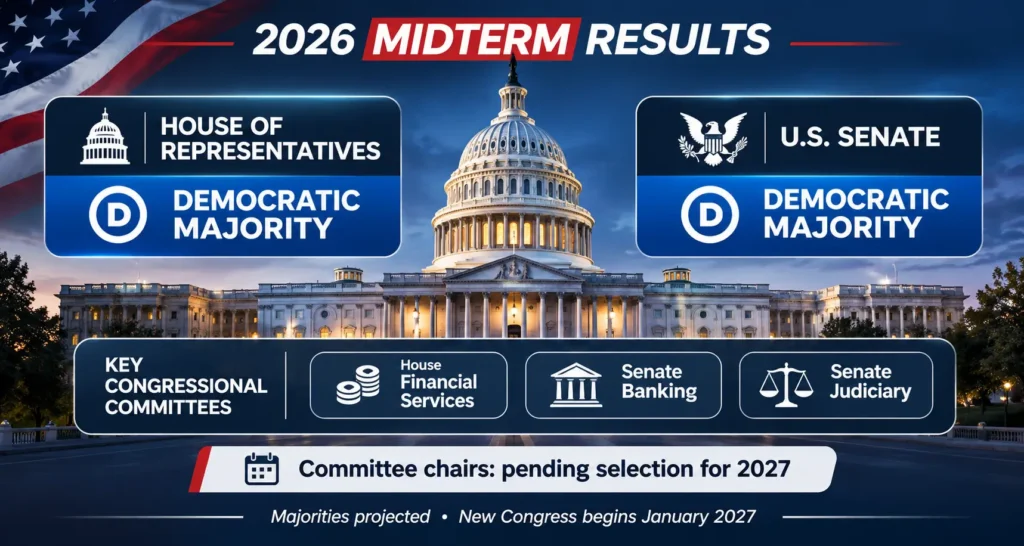
Overall, the new majority points to slower progress on pro-industry legislation and greater emphasis on oversight for the next two years.
3. Market Expectations and the November Drop
October’s softer performance carried into November. Bitcoin dipped toward the mid-$75,000s on election night, briefly recovered above $80,000 mid-week, then sold off again. By 9 November it was trading near $73,700 to $74,700, its lowest levels since August.
Drivers of the November drop
- Roughly $1.28 billion in recent spot Bitcoin ETF outflows, with BlackRock’s IBIT accounting for a large share.
- Lingering effects from the Binance hack and elevated caution.
- Uncertainty around the political and regulatory path after the Democratic sweep.
- Broader risk-off tone as macro data stayed in focus.
Near-term market expectations are currently centered on range-bound trading rather than a sharp directional move. Divided government is likely to stall major pro-crypto bills such as the CLARITY Act for an extended period. Existing stablecoin rules under the GENIUS Act and prior agency work remain in place.
Bitcoin has shown relative resilience compared with smaller tokens. Important technical levels to watch include support around $74,000 and resistance in the $76,000 to $80,000 zone. In the short term, macro data such as jobs and CPI prints, along with ETF flow trends, are expected to matter more than political headlines.
4. Tips for the Coming Days
Here are practical points to keep in mind while navigating the current environment.
- Watch the $74,000 support zone closely.
- A daily close below it would weaken the near-term structure, while a successful hold could open a retest of $76,000 to $78,000.
- Monitor daily spot Bitcoin ETF flows for signs of stabilization after the recent heavy outflows.
- Upcoming jobs and CPI data will likely influence price more than political developments in the immediate term.
Practical checkpoints
- Track whether price holds above $74,000 on a daily close.
- Watch for consecutive days of net ETF inflows as a sign of stabilizing demand.
- Note jobs and CPI releases; stronger data can pressure risk assets further.
- Size positions so a move to the next clear level does not force an exit.
- Treat political headlines as background until concrete legislative steps appear.
Conclusion
Bitcoin closed October lower, absorbed the largest heist on record, and then faced a Democratic sweep that shifts the legislative outlook toward more oversight and slower progress on industry-friendly bills. Price has tested the mid-$70,000s and ETF outflows have been heavy. The near-term picture remains range-bound, with macro data and flow trends likely to drive the next moves more than political noise.
The lessons from October and the midterms are clear. Security events and political shifts can amplify caution quickly. Traders who watch the key levels, monitor flows and keep risk defined will be better positioned for whatever comes next in this range-bound environment.
More market updates and Bitcoin analysis live in our Bitcoin Insights category.
Stay Updated
For daily alerts, honest analysis and the newest developments, follow us on X at @FreeCoins24 and join the conversation on Telegram at FreeCoins24.
FAQ: Bitcoin After the 2026 Midterms
How did Bitcoin perform in October 2026?
It opened near $83,500 and closed around $77,400, down roughly 7 percent. It briefly touched near $87,000 early in the month before sliding toward $76,000.
What was the impact of the Binance hack on sentiment?
The roughly $6.3 to $6.4 billion incident on 29 October, attributed to North Korea-linked groups, added to existing caution and contributed to heavier customer withdrawals heading into the midterms.
Who controls Congress after the 3 November midterms?
Democrats won both the House and Senate, creating a divided government with President Trump.
What does the Democratic majority mean for crypto legislation?
Progress on industry-friendly bills such as the CLARITY Act is likely to stall. Greater emphasis on oversight, ethics rules and consumer protection is expected for the next two years.
How large were the recent ETF outflows?
Spot Bitcoin ETFs saw roughly $1.28 billion in net outflows in the week ending around 6 November, one of the heavier periods of the year.
Where is Bitcoin trading now?
Around 9 November it was near $73,700 to $74,700, the lowest levels since August after dipping on election night and failing to hold a brief recovery above $80,000.
What technical levels matter right now?
Support near $74,000 and resistance in the $76,000 to $80,000 zone. A daily close below $74,000 would weaken the near-term structure.
Will political headlines drive the next move?
In the short term, macro data (jobs, CPI) and ETF flow trends are expected to matter more than political developments.