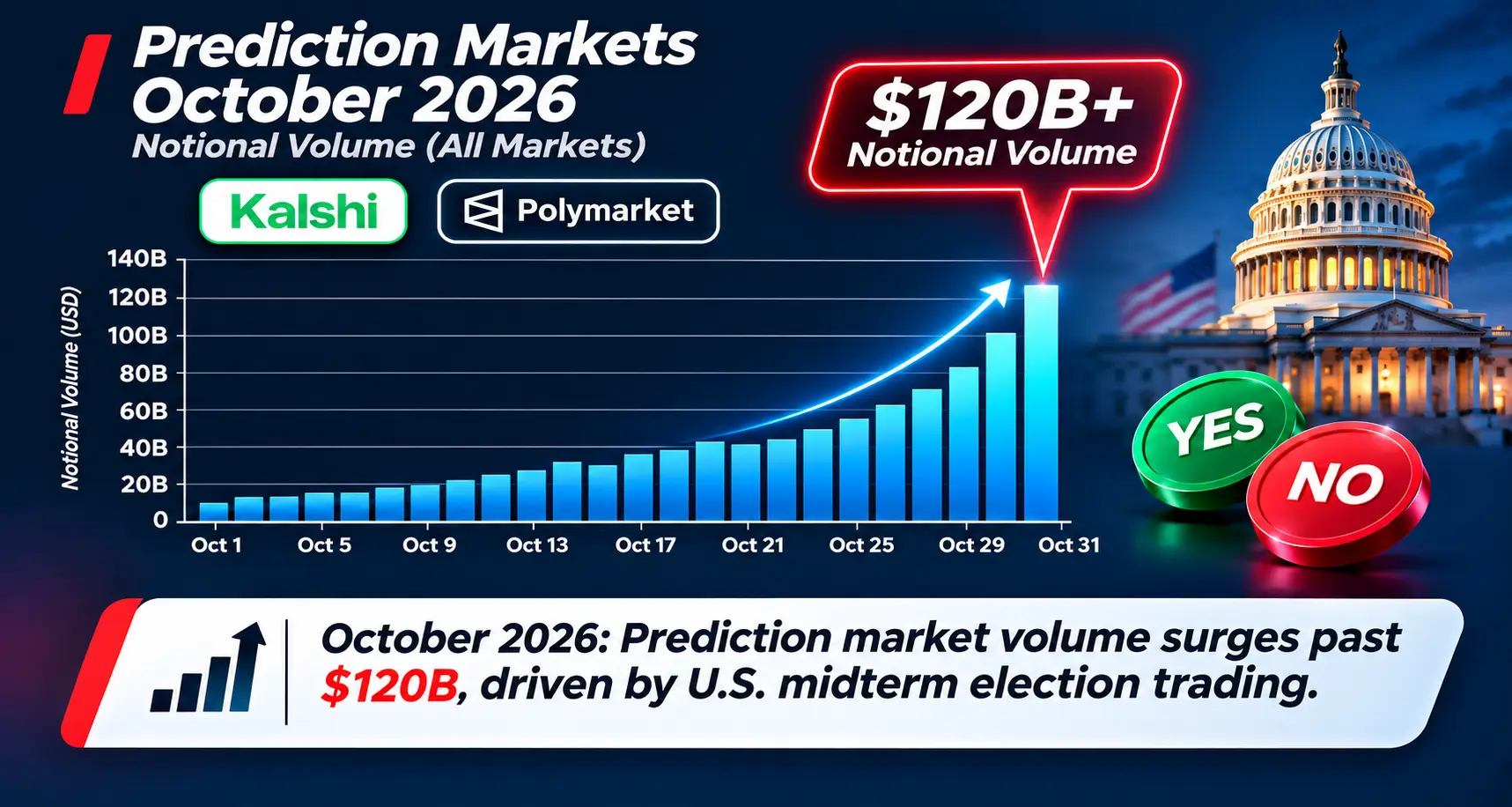
Prediction markets just closed their strongest record of all time. Notional trading volume crossed $123 billion in October 2026, more than 1.5 times the combined total of 2024 and 2025.
Kalshi and Polymarket led the charge, drawing tens of millions of site visits and turning event contracts into a mainstream way to trade outcomes. In other hands, the midterms elections added a clear catalyst. It shows once again that the predictions market could be a route to political outcomes.
Added to this, sports parlays, crypto price markets, and economic events kept volume elevated afterward. This piece covers the numbers, what drove the surge, and a simple path to get started.
1. The Record Numbers Behind the Biggest Month
October marked the first time prediction markets cleared $100 billion in a single month. Notional volume reached roughly $123.6 billion, up 58% from September. Fees collected across the top leading prediction platforms reached $647 million, while Kalshi took the largest share.
In October, it traded about $16.9 billion and far more when counted in contracts. Polymarket US processed over 74 million trades and approached or exceeded $10 billion in volume from all categories. When it comes to user growth, Kalshi saw 28 million visits and Polymarket 38 million in October. November continued the strength on several trackers, with combined volumes still running above prior months as sports and residual election markets stayed active.
2. What Drove the Surge
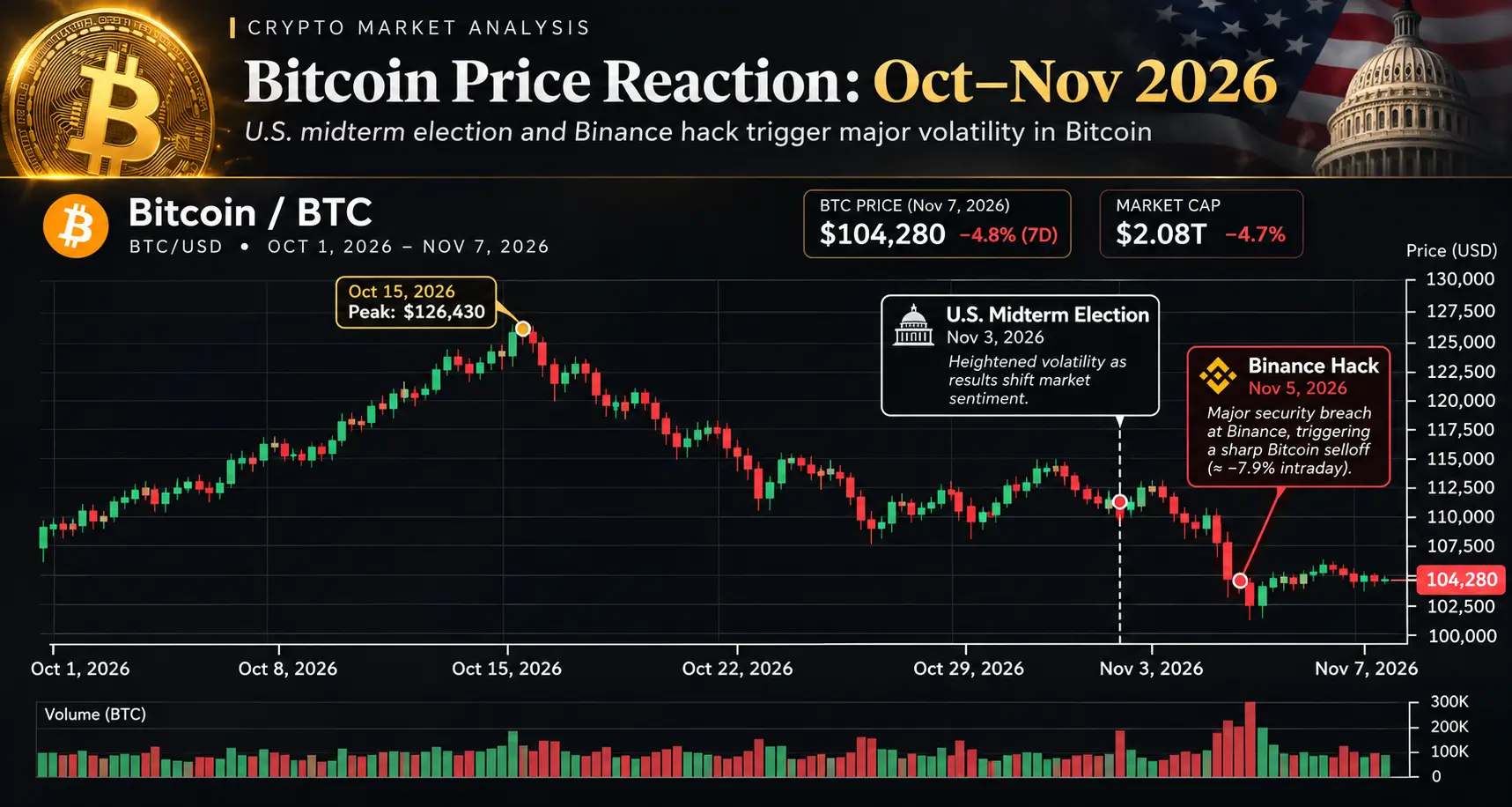
Prediction markets have recorded a significant growth during the US midterms on 3 November. It’s been a period of concentrated waves of trading. According to Pew Research, $2.7 billion in contract face value was traded on Kalshi and Polymarket related to the midterms.
Roughly 70% of that volume is tied to control of Congress or individual races. Kalshi has successfully priced in the Democratic control of both chambers near 99% hours before major networks called the results. Texas Senate and other competitive races also drew heavy individual volume.
Main drivers
- Midterm election markets ($2.7B face value on major platforms)
- Sports parlays and combo contracts
- Crypto and economic event markets
- Wider media and distribution partnerships
- Regulatory clarity for US users on regulated platforms
3. How Prediction Markets Work in Simple Terms
A prediction market lets you buy a Yes or No contract on a future event. Each contract pays $1 if the outcome is correct and $0 if it is wrong. Prices trade between 1 cent and 99 cents. A 65 cent Yes price implies the market thinks the event has roughly a 65% chance of happening.
You can sell your position anytime before resolution if the price moves in your favor. Platforms resolve markets using clear rules and data sources once the event ends.
Both platforms are regulated by the US CFTC. However, regulatory concerns over Kalshi, insider, and disproportionate trading outcomes have put many prediction platforms on restricted notice. Kalshi and Polymarket are now restricted in Utah, Michigan, and other states that are still framing a new tax layer to allow them to operate.
The CFTC has finalized permanent reporting rules, issued guidance against geographic restrictions, and prioritized insider-trading enforcement. Simply put, you will have to go through identity depending on your region before using prediction platforms.
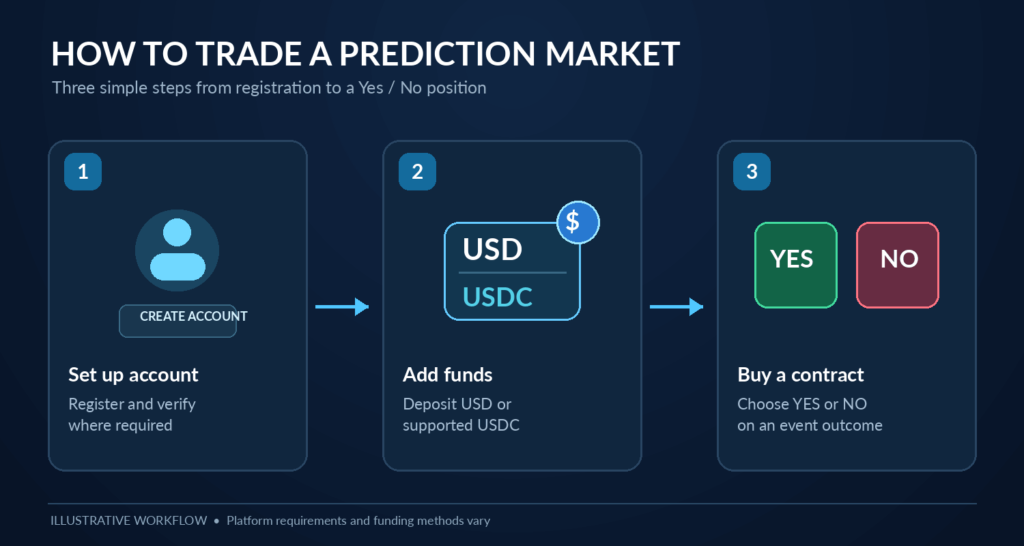
4. How to Get Started
Start with a platform available in your location. Global users can open accounts on Kalshi (may only require US members as regulatory reasons) or on International Polymarket. We will use Polymarket as an example in these step-by-step guides to start with prediction markets.
Steps to begin
- Visit International Polymarket Webpage. Create an account with email or social, or use a burner Web3 wallet address.
- Fund the account. Polymarket International accepts crypto deposits, bank transfers, and debit cards. International Polymarket uses USDC in a connected wallet.
- Browse markets and read the resolution rules carefully before trading.
- Buy Yes or No shares with a small amount first. Use limit orders when possible to control the price.
- Monitor the position and sell early if your view changes or the price moves favorably.
Start with markets you understand. Size positions small while you learn how prices react to news. Track your results. Most beginners lose money by over-trading or ignoring resolution criteria. Fees and spreads eat into small edges, so focus on markets where you have an information advantage.

5. Risks and Practical Tips
Prediction markets carry a real risk of loss. Just like gambling sports books, you really lose your money when the odds are against your predictions. Riskier with prediction markets, prices can move fast on new information. Liquidity can dry up near resolution as people are taking the time to close their position ahead of the final draw.
Practical tips
- Read every market’s exact settlement rules before buying.
- Prefer deeper markets with tighter spreads for better execution.
- Avoid chasing short-term noise; focus on events where you have an edge.
- Get your stack when the profit is enough and satisfying (hard, but that should be the goal), or you may lose, as the final draw can go against your prediction.
- Withdraw profits regularly rather than leaving large balances on any single platform.
6. Conclusion
The midterm turn prediction market is a trusted source of information. Platforms like Kalshi and Polymarket now sit at the center of this activity and offer regulated paths for US and global users. In October alone, the prediction market has scaled quickly with more prediction sites launching every day. Traders who treat it as a disciplined information game rather than pure speculation will be better positioned as volumes stay elevated.
More market updates and trading guides live in our Crypto Markets category.
Stay Updated
For daily alerts, honest analysis, and the newest developments, follow us on X at @FreeCoins24 and join the conversation on Telegram at t.me/FreeCoins24.
FAQ: Prediction Markets Record Month and Getting Started
How big was the record month for prediction markets?
October 2026 saw roughly $123.6 billion in notional volume, $22.7 billion in cash paid for contracts, and 644 million trades.
Which platforms led the volume?
Kalshi took the largest share. Polymarket US also set personal records with tens of millions of trades.
Did the midterms drive the surge?
Yes. Roughly $2.7 billion in face value traded on midterm-related contracts across major platforms, according to Pew Research.
What is a Yes/No contract?
It pays $1 if the event happens as stated and $0 if it does not. The price reflects the market’s implied probability.
Can US users trade prediction markets?
Yes, on CFTC-regulated platforms like Kalshi and Polymarket US after completing identity verification.
How do I fund an account?
Regulated US platforms accept bank transfers or debit cards. International Polymarket uses USDC in a connected wallet.
What should I read before my first trade?
The exact resolution rules and settlement source for that market. Ambiguous rules create resolution risk.
Are prediction markets gambling?
A: Regulated US platforms operate as event contract exchanges under CFTC rules. Access and product rules vary by jurisdiction.
How much should a beginner risk?
Only money you can afford to lose. Start with small positions while you learn how prices move.
Will volume stay high after the midterms?
Sports, crypto and economic markets continue to generate activity. November volumes remained elevated on several trackers.